刺繍糸・アイロンビーズの色番号 対応表
クロスステッチや刺繍の図案は色を「番号」で指定しますが、メーカーごとに体系がまったく違います。DMCの310とアンカーの403はどちらも「黒」ですが、番号そのものに共通点はありません。手元の図案と購入できる糸のブランドが違えば、番号の対応(変換)が必要になります。この記事では主要な刺繍糸の番号体系のしくみ、画面色を添えたDMC→アンカーの近似対応表、そして「なぜ完全一致の対応は存在しないのか」を率直に解説します。
なぜブランドが違うと色番号が合わないのか
刺繍糸の色番号は、そのブランドの製品群の中で「特定の染め糸」を指すカタログ上の符号にすぎません。各メーカーが独自に糸を染め、独自にカタログを作ってきたため、ブランド間で番号に関連性はありません。DMCの番号をアンカーの番号へ変換する計算式は存在せず、誰かが実物の糸を見比べて作った対応表をたどるしか方法がありません。
つまり「変換」はイコールではなく「最も近い色」を指すものです。ブランドによってはまったく同じ色味の糸が存在しないこともあり、対応表は一番近いものを示しているだけです。差し色1色なら問題ありませんが、わずかな差が目立つ広い面では、作品全体に使う前に実物の糸を色見本(シェードカード)と照合しておくべきです。
主要ブランド早見表
DMCは事実上の世界標準です。市販図案の多くはDMC番号で書かれており、他ブランドは逆ではなく「自社→DMC」の対応表を公開しています。多くの人が出会う体系を比較してみましょう。
| ブランド | 原産 | 色数(概数) | 番号体系 | 備考 |
|---|---|---|---|---|
| DMC | フランス | ~500 | 3–4 digits (+ White, Ecru, B5200) | 世界標準。多くの図案がDMC番号で書かれています。 |
| Anchor | イギリス | ~460 | 1–4 digits | 欧州で一般的。DMCとの対応表が広く出回っています。 |
| COSMO (Lecien) | 日本 | ~500 | 3 digits | 日本で人気。自社のDMC対応表を公開しています。 |
| Olympus | 日本 | ~430 | 3 digits | 日本のブランド。国内キットや手芸店でよく見ます。 |
| Hama / Perler (iron beads) | デンマーク / 米国 | ~60+ | 記号+番号 または 名称 | アイロンビーズ(刺繍糸ではない)。ボードの色コードは糸番号と無関係です。 |
DMC ↔ アンカー 近似対応表
例:310、403、ブラック。この表は代表色の参考表で、メーカーの全色一覧ではありません。
この表には一致する色がありません。その他の色はメーカーの色見本帳を確認してください。
よく使う色について、DMC番号・アンカー番号・おおよその画面色を示します。DMC↔アンカーは最も丁寧に対応づけられた組み合わせで、だからこそ多くの図案と多くの店をつなぐ実用的な橋渡しになります。色見本はあくまで目安です。バックライトの画面は染めた木綿糸と完全には一致しません。
| 色 | DMC | Anchor | 画面色(近似) |
|---|---|---|---|
| ホワイト | White | 2 | #FFFFFF |
| ブラック | 310 | 403 | #000000 |
| クリスマスレッド | 321 | 9046 | #C72B3B |
| ブライトレッド | 666 | 46 | #E3263C |
| コーラルレッド | 817 | 13 | #BB3B32 |
| タンジェリン | 740 | 316 | #FF7B1E |
| トパーズ | 725 | 305 | #FFC840 |
| レモン | 444 | 291 | #FFD600 |
| ケリーグリーン | 702 | 226 | #47A23A |
| ブライトグリーン | 700 | 228 | #1C8B3C |
| エレクトリックブルー | 996 | 433 | #1FA9DC |
| デルフトブルー濃 | 798 | 131 | #45698F |
| ロイヤルブルー | 796 | 133 | #1A4F8B |
| ネイビーブルー | 823 | 152 | #21314F |
| バイオレット濃 | 550 | 102 | #5B1F6B |
| ラベンダー | 209 | 109 | #B18BC4 |
| ゼラニウムピンク | 3326 | 36 | #F4A9B8 |
| タン | 437 | 362 | #D9A86C |
| コーヒーブラウン濃 | 938 | 381 | #43200F |
| ピューターグレー | 414 | 235 | #8C8C8C |
COSMOやオリムパスなど他のラインは、第三者の番号を鵜呑みにせず、各メーカー自身のDMC対応表を参照してください。各ブランドはDMCを基準に対応を公開しており、共通基準としてDMCを経由するのが最も確実です。
染めロット:対応表では捉えきれない差
同じブランド・同じ番号でも、色は完全には一定ではありません。刺繍糸は「染めロット」という単位でまとめて染められ、同じ番号でもロットが違えばわずかに色が異なることがあります。小さなモチーフでは気づきませんが、広い面を埋める背景ではロットの境目が見えることもあります。安全なやり方は、作品を仕上げきれるだけの量を同じロットで買い、足りなくなったときのためにロット番号を控えておくことです。
どの対応表にも注意書きが付いているのは、まさにこのためです。対応表は別ブランドで最も近い番号を選んでくれますが、それでもブランド差の上に染めロット差が重なります。差し色を超える範囲では、対応表は「買い物の候補リスト」と捉え、最終判断は実物のかせを昼光の下で並べて行ってください。
写真から色リストを作るには
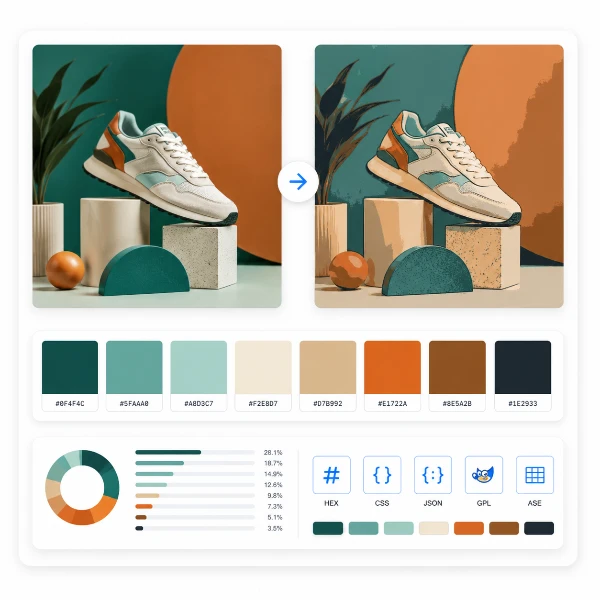
キットを追うのではなく自分で図案を作る場合、問いは逆になります。手元には写真があり、そこから少数の糸色を決めたい——という状況です。確実な方法は、画像を決まった数の単色に減色し、その上に番号入りのグリッドを重ね、各マスの色を色見本と照合することです。これにより、無限の色を持つ写真が、十数色ほどの「買える候補リスト」に変わります。市販図案と同じ理屈を、自分の画像で組み立てるわけです。
実際は2段階です。まず写真の実際の色を抽出します。PaletteForgeは画像を決まった数のパレットに減色し、各色の正確なHEXを出します。たとえば紅葉の写真が8色に減色され、その1色が #C72B3B 付近になったとします——これは上表のクリスマスレッドの行、DMC 321 / Anchor 9046 にあたり、買い物リストの出発点となる番号がすでに手に入ります。次に番号入りグリッドを作り、すべてのステッチをこれらの色のいずれかに対応させます。抽出したHEX値は画面に頼らず、日光の下で実物の色見本と照合してください。そうすれば実際の糸でも結果が崩れません。
PaletteForgeで写真のパレットを抽出する →糸を買う(Yahoo!ショッピング)
PR:この項目にはアフィリエイト広告を含みます。
必要な色番号が決まったら、そのままブランドごとの取り扱いページに飛べます。単色売りが基本なので、図案で使う番号を控えてから探すと早いです。
よくある質問
DMCとアンカーの完全な対応はありますか?
いいえ。ブランド間の対応はすべて近似です。各ブランドは別の染料を使うため、変換後の番号は「最も近い色」であって同一色ではありません。作品全体に使う量を買う前に、必ず実物の色見本で確認してください。
染めロットとは何で、なぜ重要ですか?
染めロットとは、まとめて染めた1つのバッチのことです。同じ番号でもロットが違えば色がわずかに異なり、広い面で目立つことがあります。作品を仕上げる分を同じロットで購入し、追加に備えてロット番号を控えておきましょう。
アイロンビーズは刺繍糸と同じ番号ですか?
いいえ。ハマやパーラーなどのアイロンビーズは、刺繍糸の番号とは無関係な独自の色コードを使います。ビーズのパレットと糸のパレットは、共通の番号ではなく目で見て合わせます。
写真から色番号を割り出せますか?
写真を少数の固定パレットに減色し、各ブロックの色を読み取って色見本と照合すれば可能です。画像から作った番号入りグリッド図案が、糸やビーズの色を選ぶ実用的な出発点になります。
サンプル画像で図案作りを試す

- 下のサンプルを保存し、PixelForgeで開きます。
- 「図案」モードで横64マス・12色を出発点に、耳や葉の形が読み取れるよう調整します。
- 図案とDMCの近似候補を確認し、図案PNGまたはPDFを保存します。糸色は実物の見本でも確認してください。
- 図案の縦横の目数をStitchFitへ入力し、上下左右の余白を含む布サイズを計算します。
写真を番号入り図案に変える
対応表はあるブランドの番号から別ブランドの番号へ橋渡ししてくれますが、写真から始めるなら、まず固定パレットと番号入りグリッドが必要です。PixelForgeは、どんな画像も少数の色に減色し、番号入りの印刷できる図案をブラウザ内で作成します。糸やビーズを色見本に合わせるための、すぐ使える出発点です。
PixelForgeで番号入り図案を作る →