Social Media Image Sizes 2026: The Complete Reference
Every platform crops to its own aspect ratios, and an image sized for one feed looks wrong on another — letterboxed, zoomed in, or softened by re-compression. This is a 2026 reference for the pixel sizes and aspect ratios that actually matter: feed posts, stories and vertical video, thumbnails, covers, and profile pictures across the platforms most people use. The table is the heart of it; the sections around it explain how to read and use those numbers.
Why the Right Size Matters
Two things go wrong when an image does not match a platform's spec. First, the aspect ratio: feeds crop to a fixed shape, so if your ratio is off, the platform trims your edges — often cutting heads, text, or logos out of frame. Second, the pixel dimensions: upload something far larger or smaller than the target and the platform re-scales and re-compresses it, which softens fine detail and can introduce artifacts. Matching the spec keeps you in control of both the framing and the sharpness.
2026 Recommended Sizes by Platform
These are the recommended upload sizes for the main content types. Aspect ratio is what the feed crops to; the pixel size is a clean dimension at that ratio that looks sharp on modern high-density screens. Platforms revise these periodically, so treat them as current best practice rather than permanent law.
| Platform | Content type | Pixels (W×H) | Aspect |
|---|---|---|---|
| Square post | 1080×1080 | 1:1 | |
| Portrait post | 1080×1350 | 4:5 | |
| Story / Reels | 1080×1920 | 9:16 | |
| X (Twitter) | In-stream image | 1600×900 | 16:9 |
| X (Twitter) | Profile header | 1500×500 | 3:1 |
| YouTube | Thumbnail | 1280×720 | 16:9 |
| YouTube | Channel banner | 2560×1440 | 16:9 |
| TikTok | Video | 1080×1920 | 9:16 |
| Feed image | 1200×630 | 1.91:1 | |
| Cover photo | 851×315 | ~2.7:1 | |
| Shared image | 1200×627 | 1.91:1 | |
| Personal cover | 1584×396 | 4:1 | |
| Standard Pin | 1000×1500 | 2:3 | |
| Most platforms | Profile picture | 400×400+ | 1:1 |
Vertical, Square, Horizontal — and Safe Areas
Vertical (9:16) fills a phone screen and dominates stories and short video. Portrait 4:5 is the tallest a feed photo can go before being cropped, so it claims the most space in a scrolling feed. Square 1:1 is the safest when you are unsure how a feed will crop. Horizontal 16:9 suits thumbnails and anything watched on a wide screen. If one image must work everywhere, design it inside a square and keep the important content centered.
Covers and banners add a second trap: safe areas. A YouTube channel banner is uploaded at 2560×1440, but only a central strip is guaranteed visible on every device, with the sides and top reserved for TV and desktop layouts. Keep logos and text away from the edges of any cover or banner so nothing critical gets cut on a phone.
Resolution and File Weight
Match the recommended pixel size or a clean 2× multiple of it. Upload something much larger and the platform downscales and re-compresses it anyway, wasting bandwidth and sometimes softening the result; upload something smaller and it looks blurry on high-density displays. DPI is irrelevant here — screens care only about pixel dimensions, not the print-resolution number embedded in the file. Export as JPEG for photos and PNG only when you need crisp text or transparency, and keep the file reasonably light so it uploads fast.
Hitting the Numbers Exactly
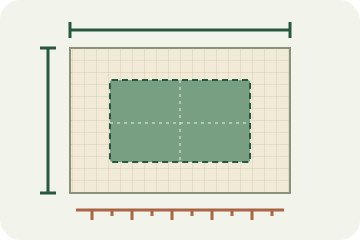
There are two steps to landing on a spec: crop to the target aspect ratio so the platform does not trim your framing, then resize to the exact pixel dimensions. Doing both yourself — rather than letting the upload do it — means you decide what stays in frame and how sharp the final image is. For a batch of posts at the same size, set the ratio once and apply it to every image so the set stays consistent.
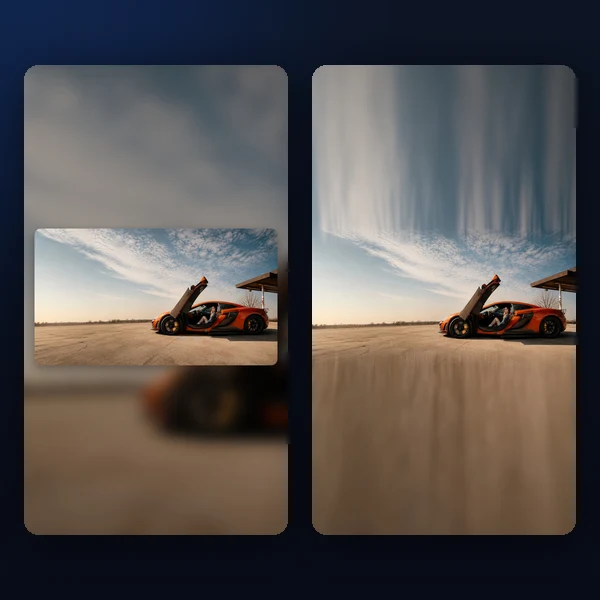
The hardest spec is 9:16, because most photos are landscape and a straight crop throws most of the picture away. For stories and reels, a dedicated tool can fill the vertical space with a blurred, gradient, or seamlessly extended background built from the photo itself instead.
Turn a landscape photo into a polished 9:16 story with Scenelyx →
FAQ
What is the safest universal aspect ratio for a feed post?
A 4:5 portrait (1080×1350) takes the most vertical space the major feeds allow without being cropped, so it is a safe default when you want one image to work across platforms. A 1:1 square is the most predictable if you are unsure how a feed will crop.
Should I upload images larger than the recommended size?
Uploading at the recommended pixel size or a clean multiple of it avoids the platform re-scaling and re-compressing your image, which softens detail. Going much larger wastes upload bandwidth and gets downscaled anyway; going smaller looks blurry on high-density screens.
Why does my image get cropped after posting?
Feeds crop to a fixed aspect ratio. If your image's ratio does not match, the platform trims the edges. Crop to the target ratio yourself first so you control what stays in frame instead of letting the platform decide.
Crop and resize to any spec
Once you know the target ratio and pixel size, the work is a quick crop and resize. Tracelyx Crop lets you lock any aspect ratio and Resize takes the image to exact dimensions — both run in your browser with no upload, so even private or client images never leave your device.
Crop to any aspect ratio →