How to Convert Images Between JPEG, PNG, and WebP
Image format conversion is one of the most common tasks in web publishing and digital design. Different platforms require different formats: CMSs often require JPEG, design tools export PNG with transparency, modern web projects prefer WebP for bandwidth savings. Tracelyx Convert handles all of these conversions in your browser — no upload, no account, and no waiting for a server to process your file.
JPEG vs PNG vs WebP: Which to Choose
JPEG is best for photographs and images with continuous tones. It uses lossy compression that removes color information your eye can't easily detect, producing small files at acceptable quality. The quality slider in Tracelyx Convert maps to JPEG quality — 85–90 is standard for web images. For photos, JPEG is almost always the right choice.
PNG is best for images that need transparency, precise edges, or lossless reproduction — logos, icons, diagrams, screenshots, and illustrations. File sizes are larger than JPEG, but quality is perfect. WebP is a modern format that supports both modes: lossy compression at smaller file sizes than JPEG, or lossless with transparency at smaller file sizes than PNG. All modern browsers support WebP, making it a good default for new web projects.
Understanding Quality Settings
The quality slider in Tracelyx Convert applies to JPEG and lossy WebP exports. At 100%, the output is as close to the original as the format allows — large file size, virtually no visible compression. At 80–90%, the difference from 100% is barely visible to the human eye, and file sizes are substantially smaller. For web use, 85% is a common standard.
Below 70%, compression artifacts become visible — blocky patterns in smooth areas, color banding, and fringing around edges. This level is appropriate when file size is the absolute priority and image quality is secondary, such as thumbnails or preview images. For finished images that will be displayed at full size, stay above 80%.
Converting Images Without Uploading Them
Most online image converters require you to upload your file to a server, wait for conversion, and download the result. This workflow has privacy implications: the server has a copy of your file for the duration of processing (and sometimes longer, depending on the service's data retention policy). For photographs, business documents, or any image you consider private, this is a meaningful risk.
Tracelyx Convert eliminates this by running conversion entirely in your browser. The file is read by the browser API, processed in a local canvas, and the output is downloaded directly to your device. The image never touches Tracelyx's servers — no upload, no copy, no retention. Close the tab and the image is gone.
Start Converting Your Images
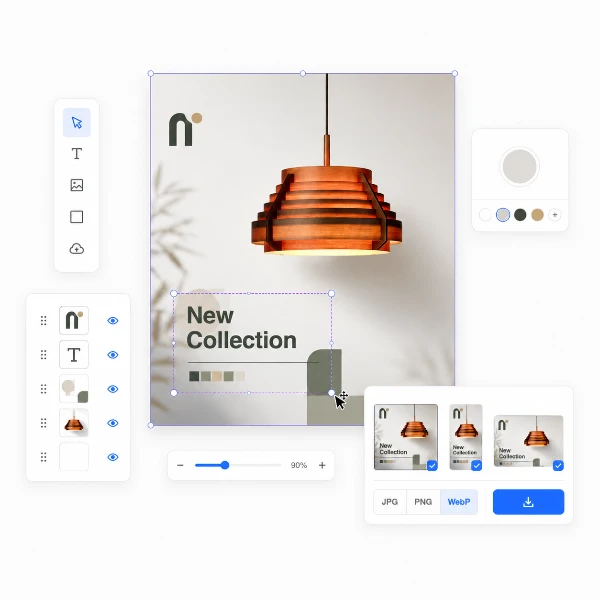
Tracelyx Convert is free, requires no account, and processes your image entirely in your browser. Drop an image, choose a format and quality level, and download the result in seconds.
Try Tracelyx Convert now →